
Why Lighting Matters More Than We Think - Especially in Mental Health Spaces
“Light isn’t just decorative. It’s not just about visibility. It’s about biology, psychology, and dignity.” – Dr Shelley James (The Light Lady)

For many of us, light is something we flick on and forget. But for Dr Shelley James, lighting designer, TEDx speaker, and now Associate of the Design in Mental Health Network, it’s a vital tool for health, empowerment, and healing.
Shelley describes light as a language.
One that speaks directly to our body and brain. Ahead of her upcoming presentation at DiMHN’s Lighting for Mental Health webinar and her talk at the DIMH 2026 conference, Smart Lighting as a Catalyst for Person-centred Care, we sat down with her to talk about the science of lighting, the spaces that still get it wrong, and why lighting must be seen as a core health intervention – not just a decorative afterthought.
From Brand Spaces to Brain Health
Shelley’s early career was in branding and environmental design, working with global brands like Visa and Shell.
“Lighting was always part of the storytelling. We used it to communicate mood, price, and even status. You walk into a space, and the lighting tells you what’s expected – whether to linger, buy, grab a perceived bargain, or behave a certain way.”
But after a serious head injury, her relationship with light changed forever.
“I was extremely photosensitive. I couldn’t tolerate certain lights. I learned, from lived experience, just how profoundly light affects your mood.”
That experience became a turning point. Shelley retrained, earning a PhD in optics and perception, qualifying as an electrician, and dedicating her life to helping others understand how light can support health, healing and dignity.
“The recovery process opened up a whole new understanding of perception, pattern, and how we move through space.”
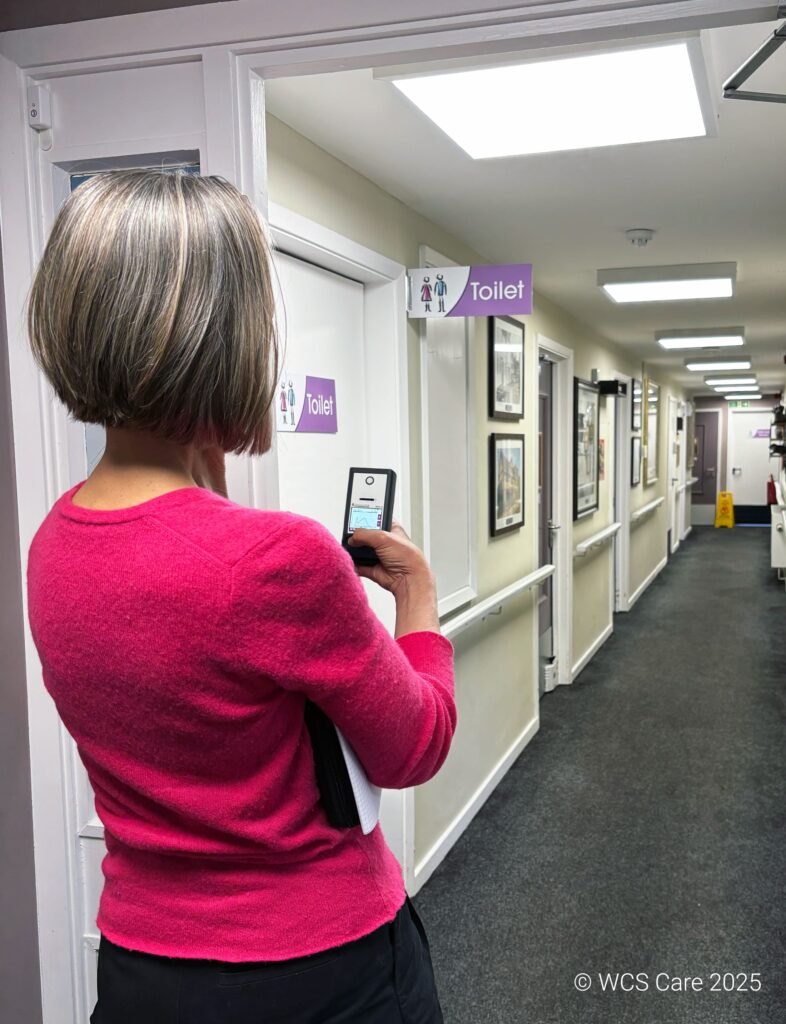
“Light Tickles the Marrow of Your Bones”
Shelley shared this poetic line to describe the deep, physiological impact of light, and she means it quite literally.
“There’s a pathway from the eye straight to the brain that affects mood, sleep, and hormones. Light tells your body what time of day it is and what to do next. If that signal is off, everything else is off.”
She’s referring to circadian and non-visual lighting, the light that affects our internal body clock.
In mental health settings, disrupted light patterns can have real consequences, such as:
- Insomnia and fatigue
- Disrupted medication cycles
- Agitation or withdrawal
- Poor recovery outcomes
“The big biobank studies that analyse thousands of records all show that the people with the brightest days and the darkest nights have the best outcomes.”
What Happens When We Get It Wrong
Shelley is passionate about shifting lighting from a tick-box exercise to a therapeutic consideration, and she’s seen first-hand the harm that thoughtless lighting can cause.
“I was in a hospital recently. There’s a lift people are taken into on a trolley, and the first thing they see is a glaring light directly overhead. That’s what they remember.”
“There was a beautiful therapeutic bath. Designed for comfort. But right above it, a harsh spotlight. You’re vulnerable, maybe naked, maybe in pain… and instead of softness and safety, you’re under interrogation lighting. That’s not healing.”
She calls this “lighting by numbers” – where specifications like lux levels are met, but the human experience is ignored.
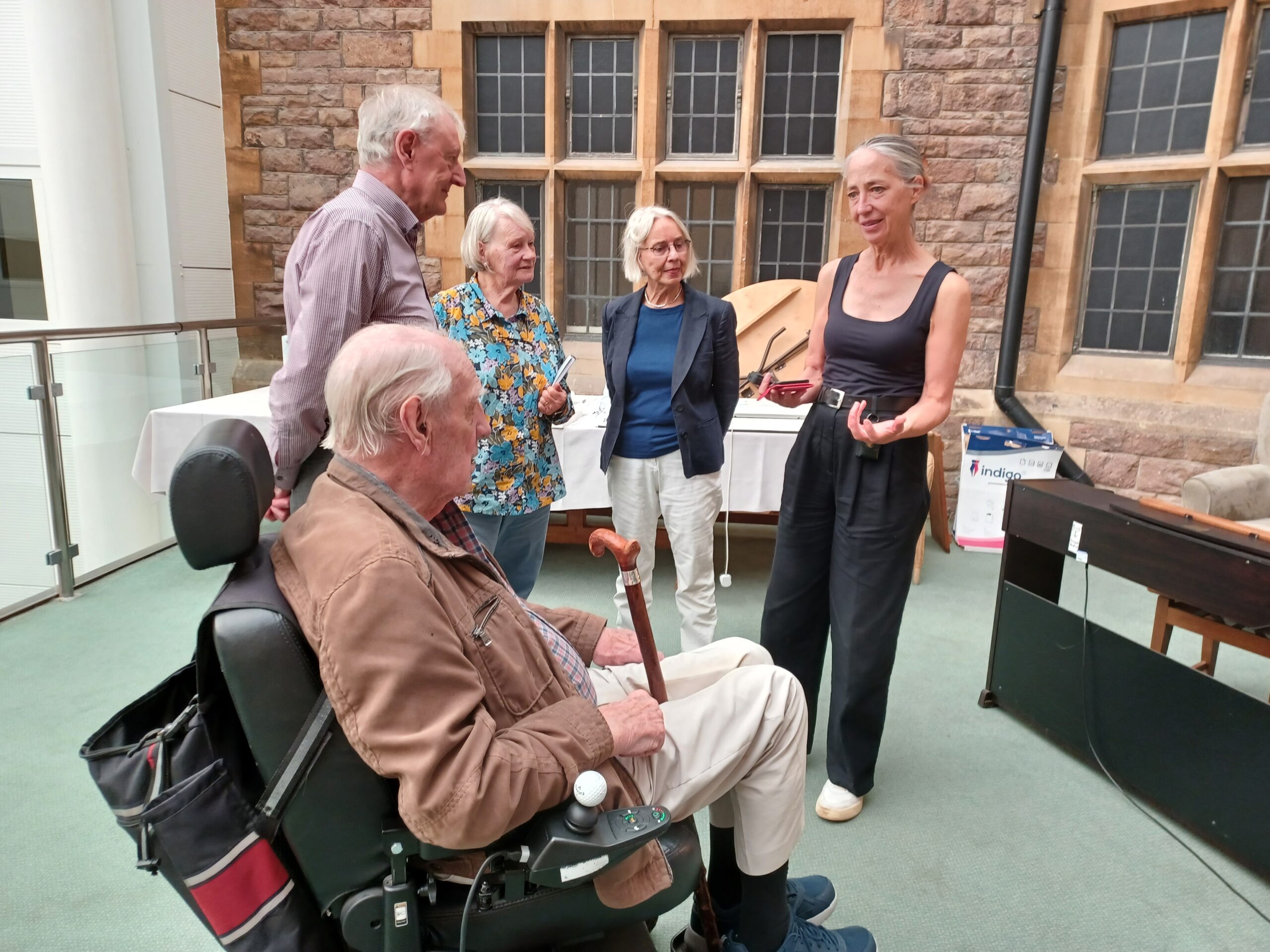
What Is Lux - and Why Isn’t It Enough?
In lighting design, lux is a unit of measurement for the amount of light that strikes a surface. It’s used to set standards, like how bright a room should be for reading, tasks, or safety.
But as Shelley points out, meeting the required lux level doesn’t guarantee a space feels right, or supports wellbeing.
“You can meet the spec, hit the lux number, and still create a space that feels harsh, clinical or even distressing.”
That’s the danger of “lighting by numbers” – where design becomes a tick-box exercise, rather than a therapeutic tool. A space might be bright enough, but:
- Is it too glaring?
- Is it uncomfortable for people to spend time in?
- Does it offer softer options?
- Does it support recovery, rest, or dignity?
Lighting for mental health needs to go beyond compliance and ask how it actually feels to the people using the space, and whether it enables adjustments.
“That applies to service users, of course, but we need to think about the support teams and loved ones too.”
From Lux to Lives: Lighting as a Health Intervention
Shelley encourages everyone, from estates teams to designers to clinicians, to reframe how we think about lighting.
“Think of lighting like cooking. You can follow the recipe, ‘painting by the numbers, ’ and still end up with something that doesn’t taste right. You’ve got to think about how it feels.”
Evidence increasingly supports light as a powerful lever for health. Shelley references studies where patients who received just 30 minutes of morning light exposure experienced improvements in:
- Sleep quality
- Mood and energy
- Aggression and self-regulation
“Sometimes, just trying a small light intervention first can reduce the need for more intensive responses — like medication.”
Zoning: Lighting That Offers Choice and Control
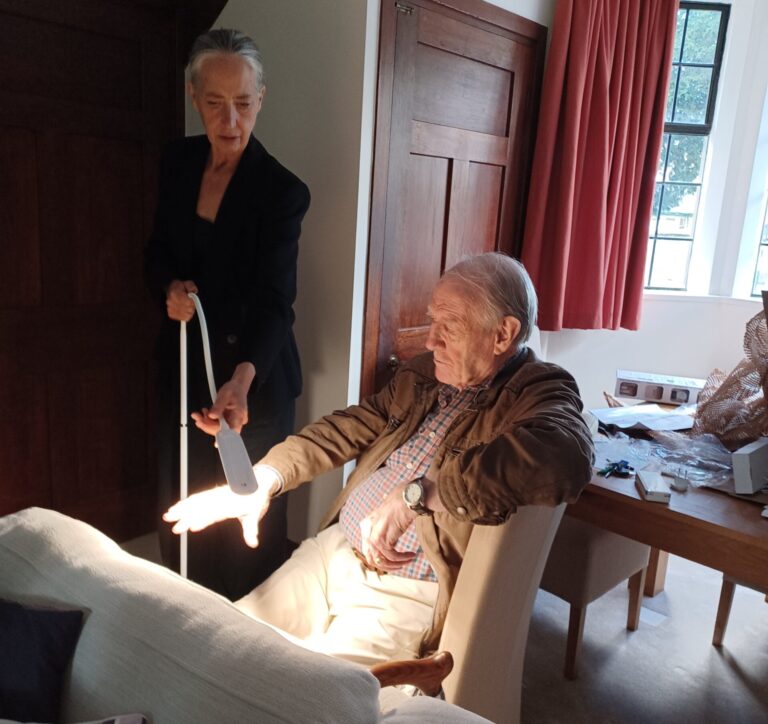
One of Shelley’s favourite (and underused) tools is zoning –creating different lighting areas within a room.
“Zoning gives people agency. It’s about creating bright areas, soft areas, quiet corners. Let people choose what works for them — especially in shared spaces like dining rooms, lounges or waiting areas.”
In one sheltered housing project, she supported residents with different sight levels by designing zones with a bright corner and a soft corner, so individuals could move to where they felt most comfortable.
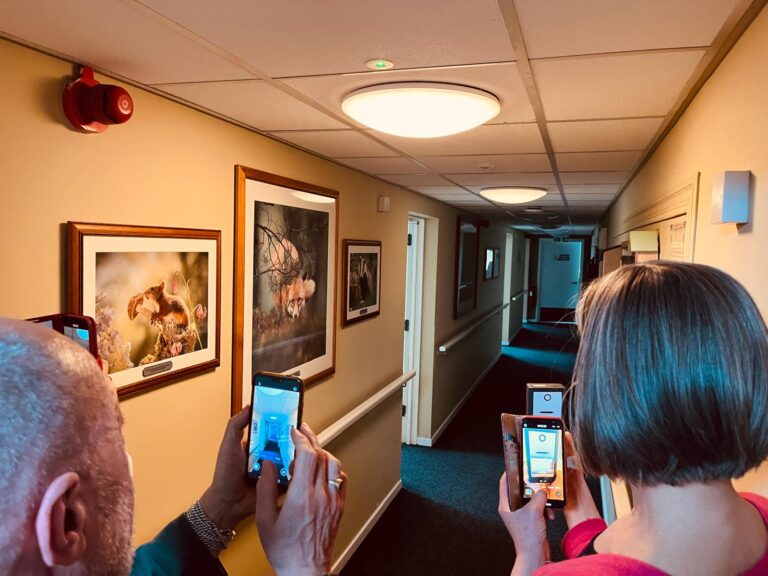
She also challenges the default use of downlights in care settings.
“Downlights everywhere might tick a spec. But they’re often the work of the devil. Lighting should support mood, not just meet code.”
Lighting and Neurodiversity
With growing awareness of sensory needs and neurodiversity, Shelley says flexibility is key.
“We’re not all the same. Even within ourselves, we’re not the same day to day. If we’re tired, have a headache, hormonal, in pain – we’re more sensitive.”
Designers, she says, should provide a buffet of good lighting options:
- Tunable lighting (adjustable colour temperatures)
- Controllable light levels
- Zones with different lighting personalities
“This isn’t about complexity. It’s about quality. Let people find what works for them, without needing an instruction manual.”
Shelley also points to emerging research on gamma-frequency light stimulation, particularly at 40 hertz, which mimics the gentle flicker of light through trees.
“40 hertz is about the same frequency you get when sunlight flickers through leaves. It’s something our brains naturally respond to. There’s new research suggesting it can help stimulate brain activity in people with dementia.”
A growing body of scientific research, including a study from MIT, shows that light pulsing at this frequency may promote brain health by enhancing memory, reducing inflammation, and supporting movement regulation in people living with neurological conditions such as Alzheimer’s.
“It’s early days, but it’s exciting to see science catching up with what nature already knew,” Shelley says. “Movement in light, not just intensity, may be part of the toolkit for healing environments.”
Empowerment Through Light
Shelley shares a surprising insight from office design: access to a light switch is one of the strongest indicators of perceived environmental quality.
“It’s about control. When you can light your own space, it tells you: this is my space. I’m safe here. That matters deeply, especially in places where people often feel powerless.”
This insight translates directly to mental health settings, where choice is often limited.
From Aesthetics to Evidence
Too often, lighting decisions are driven by looks or cost. Shelley urges the sector to lead with evidence and outcomes rather than assumptions.
“People rarely connect a resident’s behaviour with the light they’re sitting under. But once you start paying attention, it opens up a whole new way to support them.”
She references links between poor lighting and:
- Increased agitation
- Migraine frequency (linked to flicker and glare)
- Sundowning and hallucinations
- Sensory withdrawal
“Just getting people outside for 30 minutes of morning light, or retrofitting controls into a space, can have a bigger impact than you think.”

Change Starts With Awareness
For Shelley, the biggest barrier isn’t the technology; it’s the lack of awareness of lighting’s impact.
“Lighting is where exercise was 20 years ago. We didn’t realise how important it was. Lighting is on that same journey, and the mental health sector has a unique opportunity, as new environmental regulations demand a rethink of current lighting installations. If you’ve got to go through the expense and hassle of an upgrade, you might as well do it right.
We also thought it was complicated, difficult and expensive. Now everyone owns a pair of basic trainers and knows how much better they feel if they get outside and take a walk around the block. Most mental health programmes include something about exercise.”
Joining the Network as a DiMHN Associate
Shelley’s recent appointment as an Associate of the Design in Mental Health Network is more than symbolic — it’s personal, purposeful, and timely.
“Firstly, it’s a privilege. When I look at the other people on the team, I feel like I’m in amazing company.”
She speaks warmly of the Network’s role in helping to bring light, literally and figuratively, to topics that have too often remained unspoken.
“What Design in Mental Health is doing is putting some of these questions on the map. Mental health has been a bit of a taboo subject, and I think it’s really valuable to be part of a rising tide that lifts all ships.”
For Shelley, this role is also about integration, bringing together fields that are often siloed, such as ageing, learning needs, and mental health.
“Until relatively recently, mental health and ageing, or mental health and special needs education – they’ve been separate pots. One of the privileges of doing this work is to integrate those areas and to make things a bit more permeable. That’s something I’m enjoying.”
Join the Conversation – Free Lunch & Learn Webinar
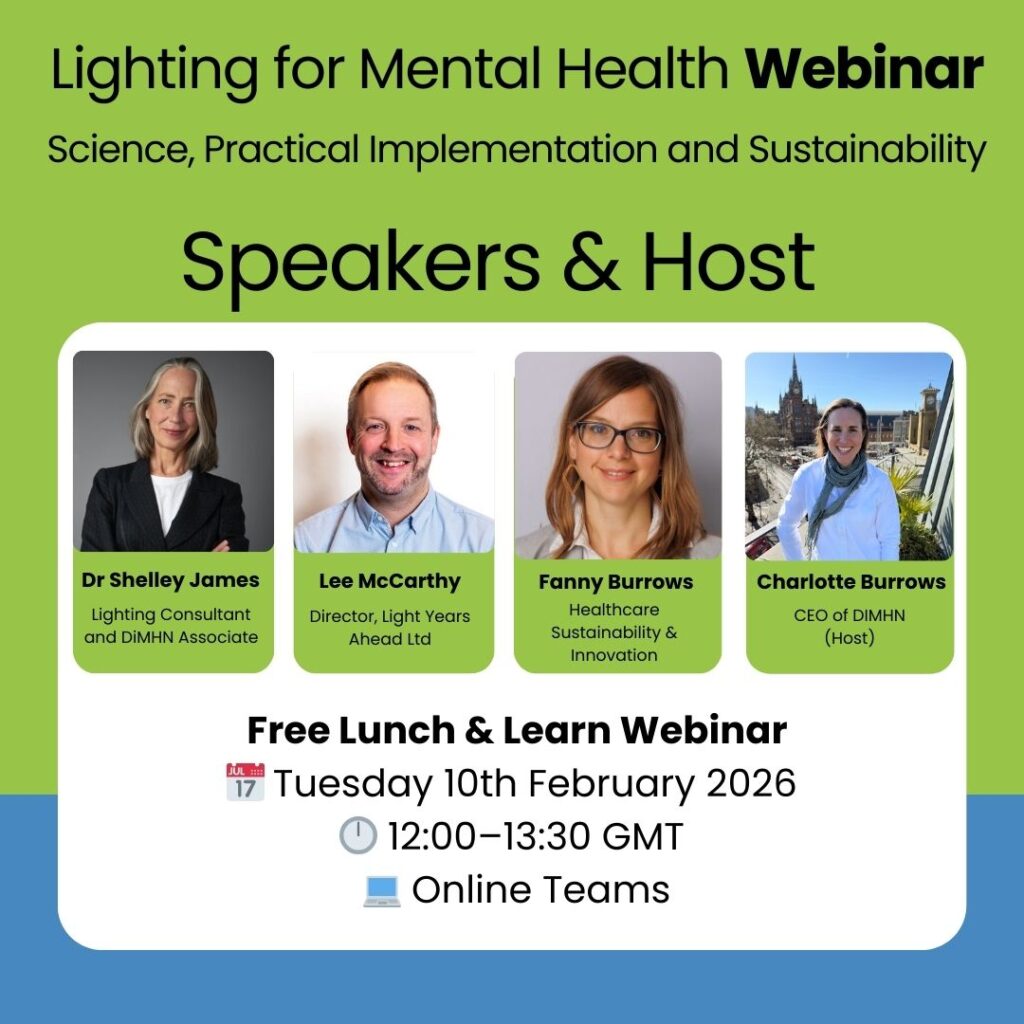
Lighting for Mental Health
From the Science and Practical Implementation to Sustainability
📅 Tuesday 10 February 2026
🕛 12:00–13:30 GMT
💻 Online via Teams
🎟️ Free to attend
This 90-minute webinar from the Design in Mental Health Network brings together experts from design, science and policy to explore how lighting can support healing, sustainability and innovation in mental health environments.
Featuring:
- Dr Shelley James – Lighting Science & Human Health
- Lee McCarthy – Principles into Practice
- Fanny Burrows – Policy, Sustainability & Climate Health
Hosted by Charlotte Burrows, CEO of DiMHN
See Shelley Speak at the Design in Mental Health Conference 2026
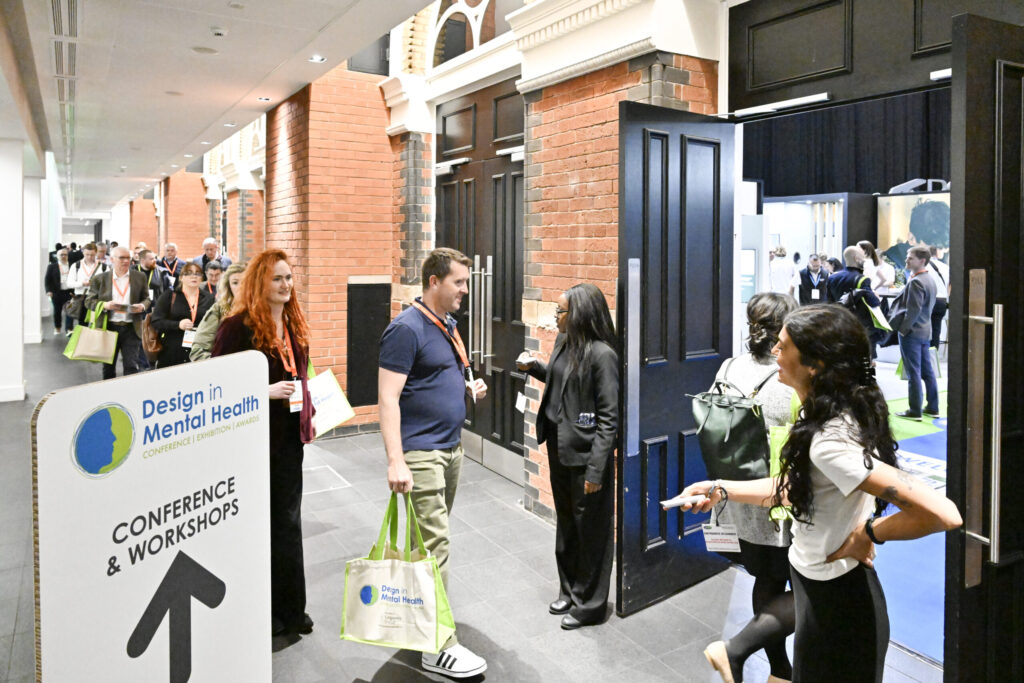
Dr Shelley James will also be presenting Smart Lighting as a Catalyst for Person-centred Care at Design In Mental Health 2026, the UK’s leading event dedicated to mental health environments.
 Coventry Building Society Arena, UK
 2–3 June 2026
From design challenges to evidence-based innovations, Design in Mental Health 2026 brings together clinicians, estates teams, designers, and policy makers to shape the future of therapeutic spaces. Organised in partnership with the Design in Mental Health Network charity, this annual conference is a vital touchpoint for anyone working in mental health design.
In 2026, public sector representatives, including NHS workers and charities, can attend for free!
Let’s keep asking brave questions, sharing what works (and what doesn’t), and designing with purpose.