

Briefing Brilliance Webinar Recap
Better Briefs for Better Mental Health Environments
Design in Mental Health Network & Arcadis Lunch & Learn Webinar – May 2026
Better Briefs, Better Outcomes
What makes a good brief?
That was the central question explored during our May 2026 Design in Mental Health Network Lunch & Learn webinar, delivered with Arcadis.
Bringing together professionals from across healthcare, architecture, estates, design, and mental health services, the session explored how stronger briefing processes can lead to safer, more therapeutic, and more effective mental health environments.
The webinar highlighted a crucial point: the quality of a mental health environment is often determined long before the design stage begins.
Across the session, speakers explored how better briefing can:
- Improve collaboration and stakeholder alignment
- Reduce redesign, delays, and avoidable costs
- Support safer and more recovery-focused environments
- Strengthen co-production and lived experience engagement
- Create clearer, more human-centred project outcomes
The session also introduced practical approaches, including personas, stakeholder mapping, journey mapping, and scenario-based thinking.
Watch the Webinar & Download the Slides
If you missed the session, or would like to revisit the discussion, you can now access the webinar recording and presentation slides.
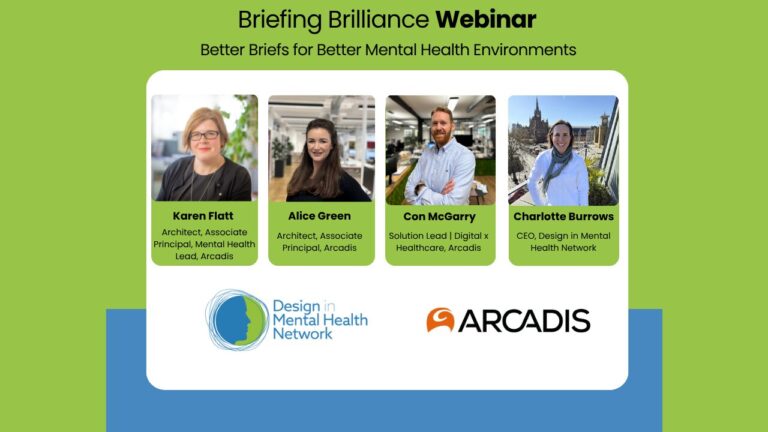
Meet the Speakers
Speakers & Topics

Karen Flatt - Architect, Associate Principal, Mental Health Lead, Arcadis
Karen explored why briefing is one of the most critical and often underestimated stages of mental health design.
Drawing on more than 25 years of experience designing mental health environments, Karen discussed how strong briefing processes can improve project momentum, reduce risk, and ensure that spaces genuinely support dignity, safety, recovery, and wellbeing.
Key themes included:
- Why RIBA Stages 0–2 are critical to project success
- The importance of defining problems rather than jumping to solutions
- Common causes of poor briefing and project delays
- The value of early stakeholder engagement and co-production
- Why operational clarity matters before design begins
- Future-proofing and flexibility in healthcare environments
Karen also reinforced that “a better brief aligns stakeholders, reduces redesign, reduces costs, and helps deliver environments that support de-escalation, dignity, and recovery.
In case you missed it, Karen did a brilliant interview with the Design in Mental Health Network recently on the topic of “Better briefs, Better outcomes”:
"Better briefs, Better outcomes" - Interview with Karen Flatt

Alice Green - Architect, Associate Principal, Arcadis
Alice focused on the practical use of personas and human-centred briefing tools within healthcare projects.
Her session explored how personas can help teams move beyond generic assumptions and design around genuine patient, staff, and lived-experience needs.
Alice demonstrated how personas can:
- Bring empathy into early-stage briefing
- Support better stakeholder conversations
- Strengthen decision-making
- Help teams visualise patient journeys
- Translate operational requirements into human experiences
- Support projects where stakeholder access may initially be limited
Importantly, the session highlighted that personas should not become static documents, but instead should remain active tools used repeatedly throughout workshops and project discussions.

Con McGarry - Solution Lead | Digital x Healthcare, Arcadis
Con presented an international case study from Saskatchewan, Canada, demonstrating how personas and journey mapping informed the briefing and design process for a major mental health hospital project.
The case study illustrated how complex operational and clinical requirements can be translated into more human-centred environments through:
- Stakeholder mapping
- Journey mapping
- Scenario testing
- Digital modelling
- Co-production approaches
- Human-centred design methodologies
The session reinforced the importance of understanding patient pathways and service interactions before physical design decisions are made.

Host: Charlotte Burrows - CEO, Design in Mental Health Network
Key Themes & Insights from the Webinar
1. Briefing is not a formality - it is a critical design stage
A recurring message throughout the session was that briefing should never be treated as a quick, front-loaded task.
The webinar emphasised that:
- Poor briefs create downstream problems
- Lack of clarity leads to redesign and delay
- Early decisions have the greatest long-term impact
- Good briefing creates stronger alignment between stakeholders
- Time invested early can reduce cost and complexity later
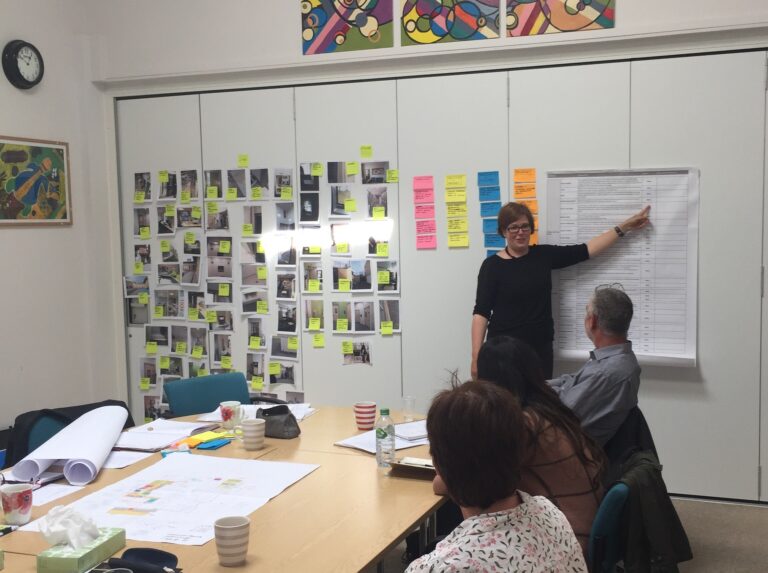
2. Co-production and stakeholder engagement must happen early
The session repeatedly enforced the importance of involving frontline staff, service users, and people with lived experience at the earliest possible stage.
Speakers discussed how:
- Engagement improves project relevance and usability
- Staff insight often reveals operational challenges not visible in plans
- Service user perspectives can identify environmental stressors or barriers
- Better engagement builds trust and ownership
The conversation also acknowledged the practical realities of engagement, including time pressures and access challenges, and explored how tools such as personas can support projects where engagement opportunities are still emerging.
3. Personas can strengthen empathy and decision-making
The webinar explored how personas can help teams understand emotional, sensory, operational, and behavioural experiences within healthcare environments.
Rather than focusing solely on departments and functions, personas encourage teams to think about:
- Anxiety
- Control
- Social interaction
- Privacy
- Environmental triggers
- Navigation and journeys
- Recovery experiences
This approach helps project teams move from “what spaces are needed?” to “how will this environment feel and function for people?”
4. Better briefs support better value for public money
The webinar also highlighted the financial and operational benefits of strong briefing.
Clearer project objectives, stronger alignment, and earlier testing can:
- Reduce redesign costs
- Improve programme certainty
- Minimise delays
- Reduce operational inefficiencies
- Support more sustainable long-term outcomes
Audience Poll: What We Heard
Within the webinar, attendees participated in a live audience poll exploring briefing challenges, confidence levels, stakeholder engagement, and familiarity with personas.
A total of 20 participants responded.
The biggest challenges when working from a project brief
Attendees were asked to rank a set of common briefing challenges based on their experience working on projects. The results, shown below in order from most commonly identified challenge to least, highlighted several recurring pressures across mental health projects:
- Not enough time to develop a robust brief
- Too many stakeholders with competing priorities
- Limited input from service users or frontline staff
- Translating briefs into practical design decisions
- Lack of clarity in the brief itself
The responses reflected the complexity of balancing stakeholder priorities while maintaining clarity, engagement, and practical delivery throughout the briefing process.
Confidence levels in briefing
Participants reported relatively high confidence overall in contributing to project briefs, with an average confidence score of 4.2 out of 5.
However, the wider discussion highlighted that even experienced teams continue to face challenges around alignment, clarity, and translating strategy into practical design outcomes.
When are frontline staff and service users involved?
Encouragingly, most attendees indicated that frontline staff and service users are involved relatively early in projects:
- 38% said during early design stages
- 35% said from the very beginning
However, some respondents still reported engagement occurring later in the process, highlighting ongoing opportunities to strengthen earlier co-production.
Familiarity with personas
One of the most interesting findings from the poll was that:
- 50% of attendees were not familiar with personas
- 30% used them occasionally
This reinforced the value of the session in introducing practical, accessible tools that can support more human-centred briefing approaches.
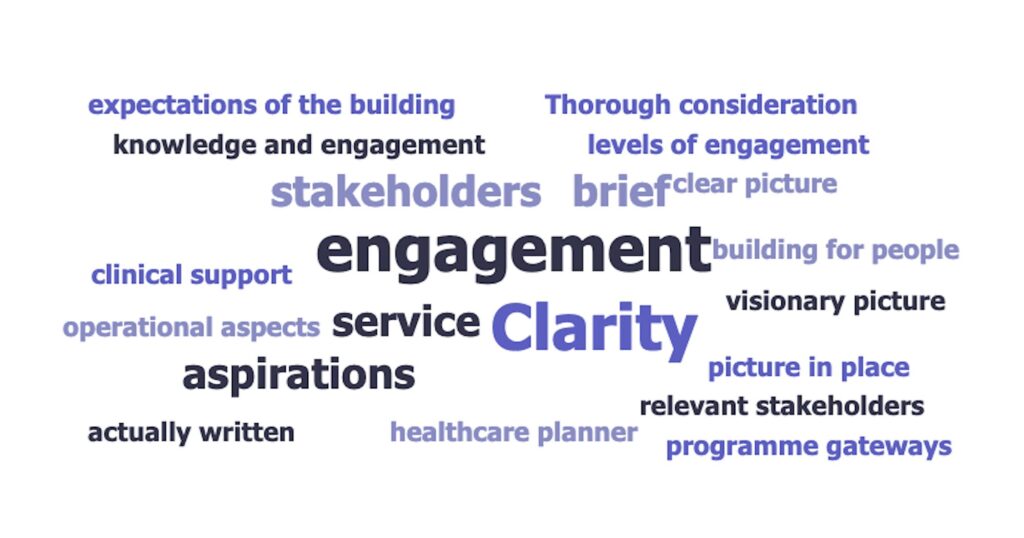
What makes a “good brief”?
The final poll question invited attendees to share words and phrases they associate with good briefing.
The resulting word cloud highlighted several dominant themes:
- Clarity
- Engagement
- Stakeholders
- Service
- Aspirations
- Visionary picture
- Building for people
- Knowledge and engagement
The responses reflected a strong collective emphasis on collaboration, communication, and shared understanding.
Questions & Discussion
The live Q&A explored several important themes around engagement, evidence gathering, and practical implementation.
One audience question asked:
“Where do the joy and pain points come from? How would this work for a service or building which wasn’t yet built or designed?”
Speakers discussed how these insights can be drawn from:
- Patient and service user feedback
- Lived experience engagement
- Staff insight
- Post-occupancy evaluations
- Learning from similar services and environments
- Existing evidence and operational experience
The discussion reinforced that even where a service does not yet exist, valuable learning can still be gathered through comparative environments, engagement activities, and scenario-based design approaches.
Further Resources Shared During the Webinar
The Design with People in Mind publications and resources were also highlighted during the session.
Explore Design with People in Mind here > (You’ll need to sign in as a member)
These resources bring together research, evidence, and best practice focused on improving health and care environments through thoughtful, inclusive design.
Continuing the Conversation at Design in Mental Health 2026
The themes explored during the webinar will continue at the Design in Mental Health Conference & Exhibition 2026.
Karen Flatt, Alice Green, and Con McGarry will be delivering:
Design Thinking Workshop: Enhancing the Mental Health Patient Journey
📅 3rd June 2026
📍 Design in Mental Health Conference & Exhibition 2026
The workshop will build on the webinar discussion with a more interactive and practical exploration of:
- Design thinking
- Personas
- Stakeholder mapping
- Journey mapping
- Patient experience
- Human-centred design approaches
The session will provide attendees with opportunities to explore these methods collaboratively alongside peers from across the sector.
The webinar also highlighted Karen Flatt’s conference presentation: