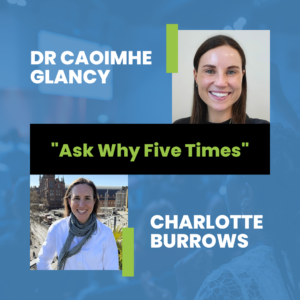

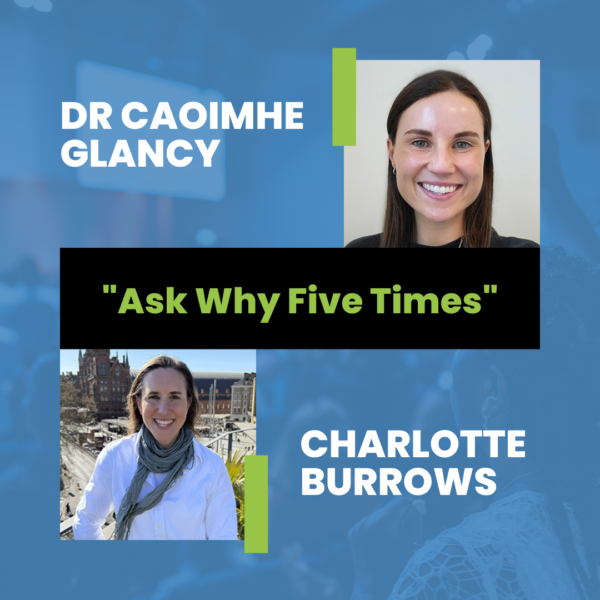
Ahead of Design for Healthcare Environments Ireland, Senior Registrar in Psychiatry, and former HSE Spark National NCHD Innovation Fellow Dr Caoimhe Glancy believes one of the most powerful tools in healthcare isn’t a new technology or a bigger budget; instead, it’s curiosity. Joined by Charlotte Burrows, CEO of the Design in Mental Health Network, she explains why better healthcare begins when clinicians stop accepting broken systems and start asking better questions.
Healthcare professionals are natural problem solvers.
Every day they adapt to unexpected situations, work around systems that don’t quite function as intended and find creative ways to deliver safe, compassionate care despite mounting pressures. Yet ask most doctors, nurses or allied health professionals whether they see themselves as designers, and the answer would almost certainly be no.
For Dr Caoimhe Glancy, however, that’s exactly what they are.
“Healthcare workers innovate every day,” she says. “People make workarounds every single day in their jobs. They just don’t necessarily call it innovation.”
It’s an observation that sits at the heart of a growing movement within healthcare. Design thinking is no longer something reserved for architects, product designers or innovation teams. Increasingly, it’s becoming a practical mindset that helps frontline clinicians improve the services, processes, systems and environments they work within every day.
Ahead of Design for Healthcare Environments Ireland, where Caoimhe will present Design Thinking Skills for Frontline Workers, we spoke with her alongside Charlotte Burrows, CEO of the Design in Mental Health Network, about why curiosity may be one of healthcare’s most undervalued clinical skills, and why every healthcare professional already has the potential to become a designer of better care.
An "Aha" Moment
Caoimhe’s journey into service design didn’t begin with a grand innovation strategy; it started with a frustration.
While completing her psychiatry training, she was working with people living with long-term mental illness when she discovered that a service routinely recommended to patients simply wasn’t functioning.
“It had been advertised for patients to self-refer, and we had been giving this information to patients for months,” she recalls. “Then we realised it wasn’t actually running. I just remember thinking, ‘We can’t even get this right.'”
Shortly afterwards, an email advertising a service design course through HSE Spark landed in her inbox. She admits she had little idea what service design actually involved, but applied anyway.
What followed was, in her words, an “aha moment”.
“I absolutely fell in love with it,” she says. “It was learning how systems work, how everything is connected, and how you can’t ignore all the other pieces of the puzzle.”
That experience fundamentally changed how she viewed healthcare.
Like most clinicians, she’d been trained to improve services through audits and quality improvement projects. Valuable though they are, they often begin with an assumption.
“This is the problem. This is the solution. Let’s go.”
Design thinking challenged that instinct completely.
Instead of rushing towards answers, it asks something deceptively simple:
Are we even solving the right problem?
Fall in Love with the Problem
One phrase comes up repeatedly throughout our conversation.
“I love the exercise where you ask yourself ‘Why?’ five times,” Caoimhe says. “Before you start trying to solve something, fall in love with the problem.”
It’s advice that sounds almost counterintuitive in healthcare, where clinicians are trained to make decisions quickly.
But for Caoimhe, she’s learned that slowing down at the beginning actually saves time later.
During a project redesigning the induction process for psychiatry trainees, she discovered that newly appointed registrars were expected to work on-call in busy emergency departments within just two weeks of starting, often with very little preparation.
Rather than immediately proposing a better induction programme, she mapped their journeys, interviewed staff and explored what they were actually experiencing.
The result wasn’t one obvious solution; it was half a dozen.
“You spend more time in that discovery phase,” she explains. “We’re time-poor in healthcare, and we don’t always have the luxury to keep iterating once something is implemented. Sometimes you get one chance to solve a problem properly.”
That philosophy now influences her clinical practice just as much as her improvement work.
“Even with patients, I find myself stepping back and asking, ‘Have we actually considered everything?’ It’s a mindset shift more than anything.”
The Problem Usually Isn't the Problem
One of the most powerful examples Caoimhe shares concerns a project looking at inappropriate referrals into psychiatry services for older adults.
Initially, it appeared staff simply weren’t providing the information needed.
The instinctive response would have been education.
More training.
More reminders.
Instead, the team discovered the referral system itself had been in place for over a decade and simply wasn’t designed to collect the right information.
“The system wasn’t supporting staff,” she explains. “Initially, you look at the data and think people are doing it wrong. But actually, they weren’t being supported to do it right.”
It’s a familiar pattern across healthcare.
Broken processes become accepted.
Workarounds become normal.
New staff are quietly taught the unofficial (workaround) way of doing things because “that’s how it works here.”
“The fact that that’s acceptable is difficult,” Caoimhe reflects. “People say, ‘No, don’t do it like that because it doesn’t work.’ That happens multiple times every day in healthcare.”
Design thinking, she believes, gives clinicians permission to challenge that acceptance.
“It gets people thinking, ‘Actually, I can change the system, not just treat the patient.'”
Curiosity Is Within Your Right
One of the conversation’s most memorable ideas isn’t really about design at all.
It’s about permission.
Many healthcare professionals assume system problems belong to somebody else.
If an IT system is frustrating, that’s for IT.
If a process is inefficient, my manager will deal with it.
If the environment creates unnecessary stress, someone else must own it.
Design thinking quietly dismantles those assumptions.
“I think it gives people confidence,” Caoimhe says. “It makes you realise it’s within your right to have curiosity about solving things outside your immediate role.”
Charlotte sees exactly the same shift across the projects she encounters through the Design in Mental Health Network.
“So often,” she says, “design is the bridge between recognising there’s a problem and creating something people genuinely want to access or use.”
But only if teams resist the temptation to jump straight towards solutions.
“When you’re compassionate and caring, your instinct is to help immediately,” Charlotte explains. “Good design asks you to pause first and ask: What is the problem we’re actually trying to solve? Have we got people with different knowledge and experiences together and given them space to understand the problem collectively?
A pause is not about delaying action. It helps organisations focus scarce resources on what matters most. It creates space to build empathy, challenge assumptions and understand the whole experience rather than responding only to the most visible symptom.
Innovation Doesn't Have to Be Big
Ask people what innovation in healthcare looks like and many will picture cutting-edge technology, major capital investment or multimillion-pound transformation programmes.
Caoimhe smiles at the suggestion.
“I think innovation is considered quite a lofty word,” she says. “Healthcare workers often reject it because they think, ‘That’s not me.’ But then you talk them through what innovation actually is, and they realise they’re already doing it every single day.”
From working around broken systems to adapting care for individual patients, clinicians are constantly redesigning healthcare, often without recognising it.
“The people coming to Spark for funding would almost apologise,” she laughs. “‘Oh no, it’s not innovative.’ But it absolutely was. They’d taken almost no resources and found a completely different way of doing something.”
Some of the most powerful examples she’s encountered weren’t about inventing new technology at all.
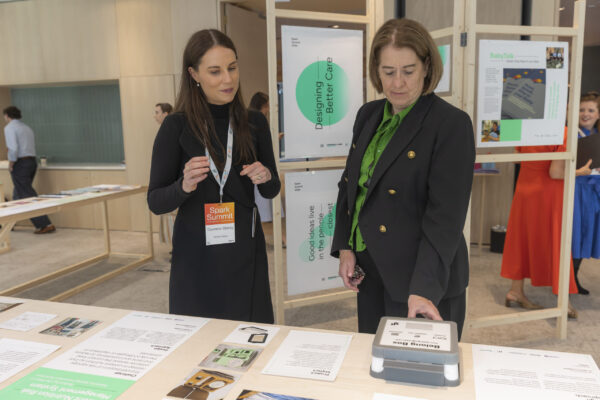
One project that was showcased at the Design Lab at the Spark Summit this year was the Belong Box. Whilst simple-sounding, the box was designed for patients’ belongings that are frequently misplaced. It had non-slip patches so it could remain on the table and separate slots for glasses and dentures. During the iteration phase, they also incorporated patient feedback on self-care. The box might not seem like much to healthcare professionals at a glance, but it allows patients to have autonomy around their belongings and gives them back some independence and dignity.
Another project completely redesigned cataract surgery by moving treatment into a community setting, dramatically reducing waiting times. Clinically, the outcomes were excellent, but what stayed with Caoimhe wasn’t the surgery itself.
“It was what the patients talked about afterwards,” she says. “They loved that there was free parking. They could get the bus. It was close to where they lived. It was surrounded by a park.”
Healthcare professionals naturally focused on the sight-saving surgery.
Patients remembered the experience.
“It’s funny,” she reflects. “You’re thinking about this incredible clinical outcome, while they’re talking about how easy it was to get there.”
It is perhaps one of the simplest reminders of what design thinking asks us to do: stop assuming we know what matters most.
Ask the People Who Actually Know
Throughout our conversation, one message returns again and again.
Don’t assume. Ask the right people.
For Caoimhe, one of the biggest differences between traditional improvement work and design thinking is the amount of time spent listening before acting.
That doesn’t mean another online survey.
It means real conversations.
“I think there’s huge value in sitting down with people face-to-face,” she says. “Creating a safe space where they feel comfortable speaking openly.”
Often, the richest insights emerge when managers aren’t present and people feel able to describe what really happens rather than what should happen.
Even experienced teams can be surprised.
During one journey-mapping exercise facilitated by designers, everyone initially assumed they already understood the process being examined.
“Then it was actually shocking,” Caoimhe recalls. “We were saying, ‘I never thought about that.'”
Sometimes familiarity becomes the biggest obstacle to improvement.
As she points out, new starters often notice problems that long-serving staff no longer see.
For one psychiatry induction project, she asked registrars to send her voice notes during their first two weeks whenever they encountered something confusing or unexpected.
“I wasn’t there to solve the problem,” she explains. “It was simply to capture what they were experiencing while they still had fresh eyes.”
The insights were remarkable.
“They were coming up against things none of us realised were happening.”
It is a beautifully simple idea, and one that costs almost nothing.
Designing With People, Not For Them
Listening, however, is only the beginning.
Caoimhe is careful to distinguish meaningful co-production from consultation that exists simply to tick a box.
“You sometimes see projects described as ‘co-produced’,” she says, “but when you look closer it was really just a couple of surveys.”
That, she believes, does patients a disservice.
“Co-production is going along the journey with people. It’s not a once-off listening exercise.”
She shares the example of a multidisciplinary team supporting someone whose anxiety had left them increasingly isolated at home.
Rather than simply recommending more activity, a social worker gradually helped them rebuild confidence, applying for a bus pass, walking routes together and slowly increasing independence over several months.
“On paper it looks incredibly simple,” Caoimhe says.
“But the impact on that person’s quality of life was huge.”
Good design isn’t always about dramatic interventions.
Sometimes it’s about staying alongside someone long enough for meaningful change to happen.
Charlotte expands on this idea from a broader systems perspective.
“We have to be careful not to perpetuate existing inequalities,” Charlotte says. “Design should reduce those inequalities, not reinforce them.”
Too often, services are designed around the people an “average user”
Rather, begin with the experiences of people who are most likely to be excluded, underserved or overlooked.
Sometimes the Smallest Changes Matter Most
Not every improvement requires a new building.
In fact, one of Caoimhe’s favourite examples involved nothing more complicated than changing a department’s name and improving how it was found.
Patients attending ophthalmology appointments in one hospital regularly arrived late, or failed to arrive at all.
The initial assumption was poor navigation, but the reality was simpler.
Many patients didn’t know how to pronounce “ophthalmology”, never mind ask someone where it was. Many people felt uncomfortable asking for directions because they couldn’t confidently pronounce or spell the word ophthalmology. Rather than risk feeling embarrassed, some avoided asking altogether.
Following conversations with patients and staff, the department became the Eye Department, supported by clearer signage and wayfinding.
“It sounds so simple,” Caoimhe says.
“But it had a huge impact.”
Something as small as changing a word reduced anxiety, improved punctuality and made the service easier to access.
Charlotte points out that environmental improvements are often equally straightforward.
“Sound, lighting, furniture, paint colours, wayfinding, they can all fundamentally change how an environment feels.”
But she is equally clear that environments cannot succeed in isolation.
“The best environment in the world won’t deliver the best outcomes if your processes undermine it.”
Likewise, excellent staff can only compensate for poor environments for so long.
Healthcare systems, operational processes and physical spaces are inseparable.
Every Cubicle Is Someone's Space
Asked about healthcare environments, Caoimhe recalls something she was taught as a junior doctor that has stayed with her throughout her career.
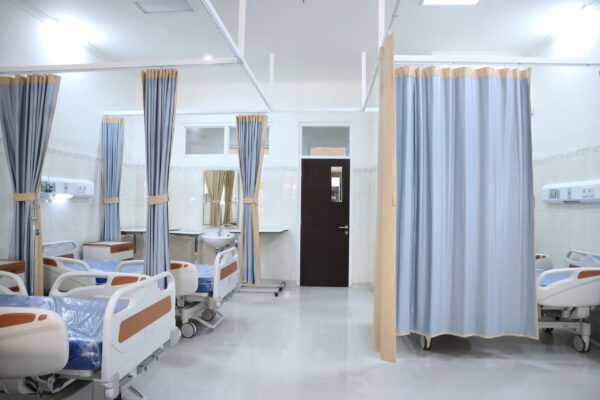
“When you go into a patient’s cubicle,” she says, “treat it as if it’s someone’s home. You wouldn’t sit on someone’s bed in their house without asking.”
Although a hospital stay may be temporary, for that moment, that small curtained space is where someone is living, recovering, worrying and trying to find some sense of dignity.
“It’s their space,” she says, “and it’s their peace.”
Charlotte recognises the same principle from her experience within prisons.
“One of the things you become very conscious of,” she reflects, “is how you enter someone’s space.”
Environments should help both patients and professionals understand that a space belongs to the person receiving care or in an environment that is their home, even if only temporarily.
Good design supports dignity not just through the physical environment itself, but by encouraging the behaviours and relationships that environment makes possible.
Becoming Positive Disruptive Forces
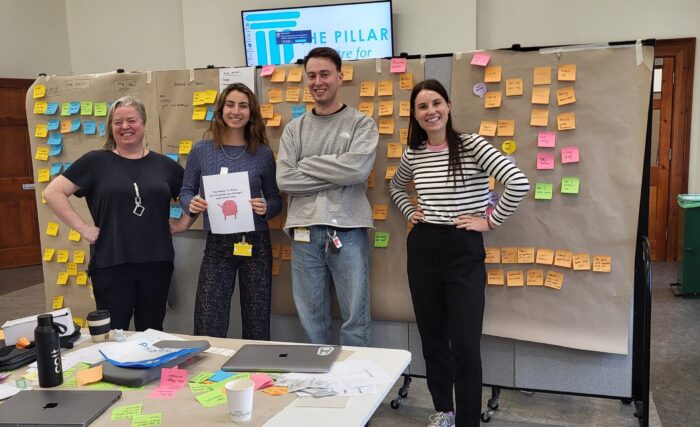
If Caoimhe could leave every delegate at Design for Healthcare Environments Ireland with one idea, it would be wonderfully uncomplicated.
“Ask why five times.”
Because once clinicians begin questioning assumptions, something remarkable happens.
Problems become opportunities.
Processes become redesignable.
Innovation stops belonging to somebody else.
“I really hope design thinking becomes as routine as quality improvement,” she says. “I think that’s where healthcare is heading.”
Not because it replaces audits or research, but because it changes the questions we ask before we begin.
Charlotte agrees.
After all, the people closest to healthcare’s everyday frustrations are often the people closest to its best solutions.
We simply need the courage to stay curious a little longer, listen a little longer and ask one deceptively simple question:
Why?
Then ask it four more times.
Final thought
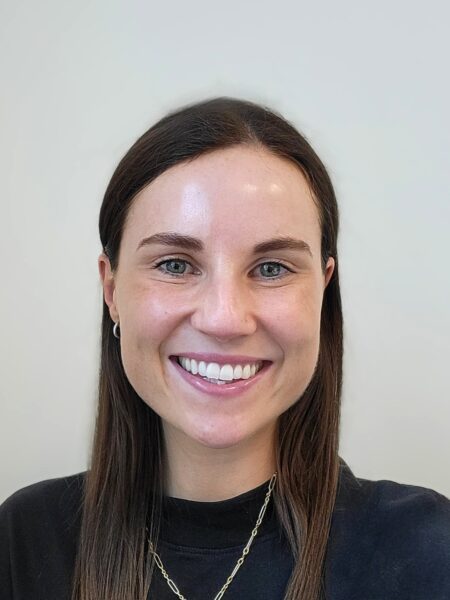
Caoimhe offers one final reflection that perfectly captures the spirit of design thinking.
Healthcare professionals, she says, shouldn’t underestimate the influence they already have.
“They can be a positive disruptive force.”
Not by tearing systems down, but by refusing to accept that “this is just how we’ve always done it.”
Because every better service, every calmer environment and every more compassionate patient experience begins in exactly the same place:
Someone was curious enough to ask whether there might be a better way.
Share the learnings, and continue the conversation
Healthcare professionals don’t need to become designers to improve healthcare.
They simply need the confidence to question assumptions, involve the people who matter most and remain curious enough to ask whether there might be a better way.
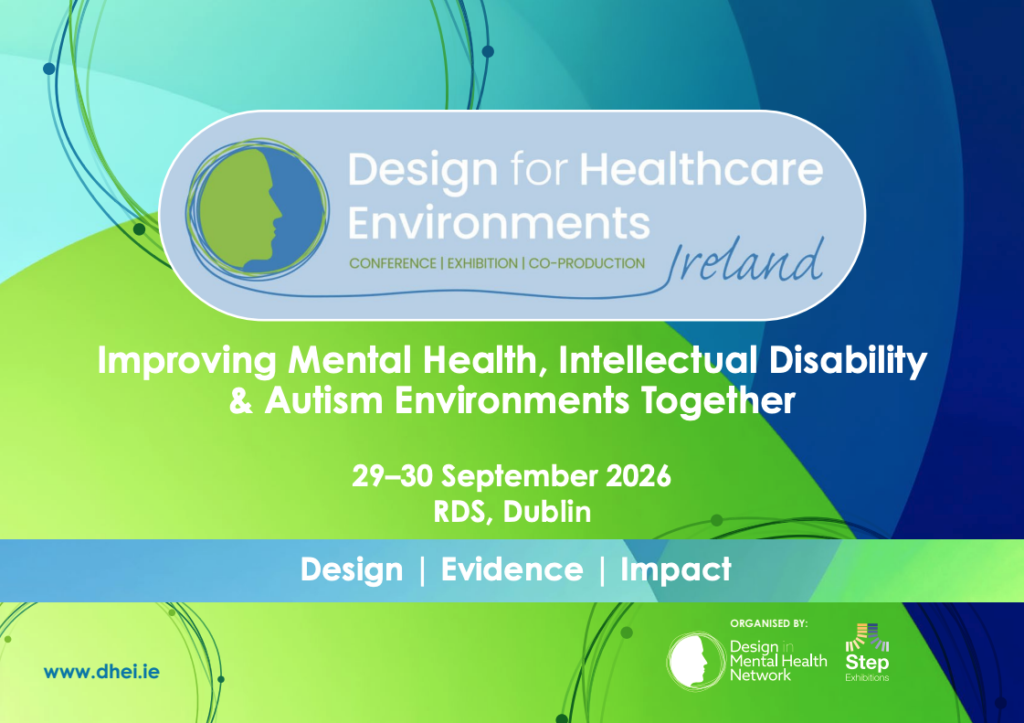
If you’d like to explore how design thinking can help transform everyday healthcare practice, join Dr Caoimhe Glancy at Design for Healthcare Environments Ireland, where she’ll present Design Thinking Skills for Frontline Workers. Her session will offer practical tools and real-world examples to help clinicians, managers and healthcare leaders redesign services from the ground up, starting with the right questions.
Register now to secure your place and discover how design thinking can help create more compassionate, effective healthcare environments.